
BeephoniX drone detection
BeephoniX focuses on acoustic drone detection, as sound offers unique advantages in situations where other modalities may fall short.
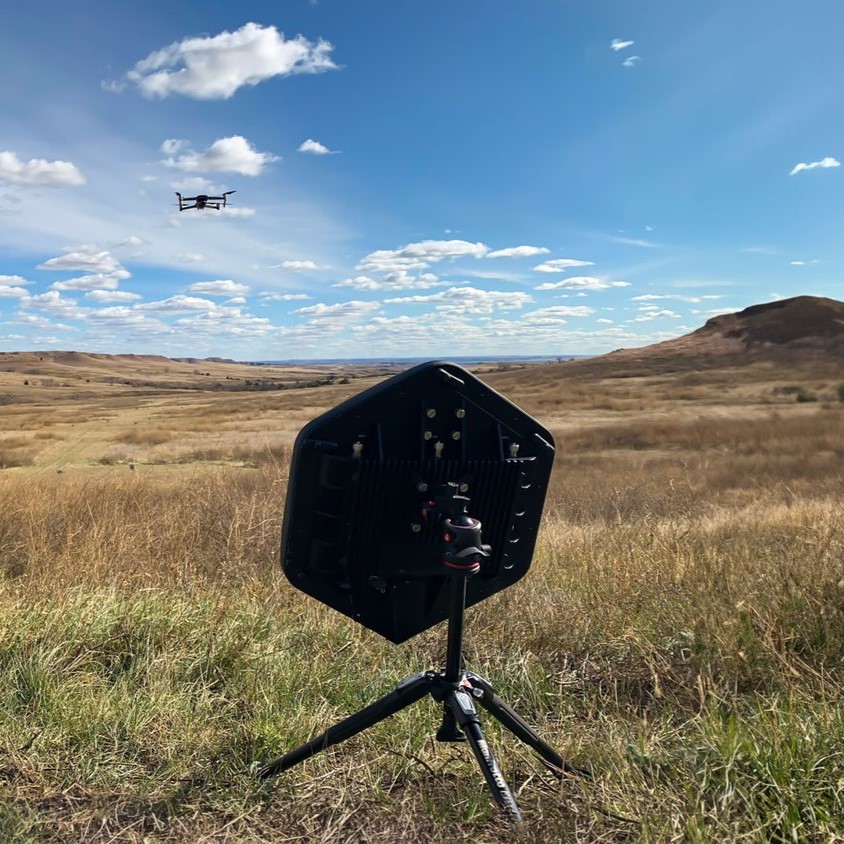

Solutions for security
Drones and other small unmanned aerial vehicles are increasingly used in conflicts and pose a growing risk to public gatherings such as the National Remembrance Day at Dam Square or locations like the Binnenhof in the Netherlands.
To counter attacks from these aircraft, early and accurate detection is crucial. Detection not only involves locating a drone but also assessing its intent, such as checking for a potential explosives. After an attack, detection can also confirm whether the drone has been neutralized (‘kill evaluation’).
Drones can be detected using various modalities, such as visual, radar, radio waves, or sound. Each modality has its pros and cons, depending on the situation.
BeephoniX focuses on acoustic drone detection, as sound offers unique advantages in situations where other modalities may fall short.
Passive
Sound is a passive modality, meaning the noise generated by the drones themselves is sufficient to locate and identify them (using a signature database). Unlike active radar, for example, there is no need to emit a signal. This ensures that the adversary is not alerted to the possible detection of their drone.
No direct line of sight required
Sound detection is also possible in darkness. Additionally, the physics of sound allows sound waves to bend beyond the horizon (atmospheric refraction) and around buildings (diffraction). Even without direct line of sight to the drone, its presence can be confirmed through sound. This is particularly relevant in the context of urban warfare.
Payload identification
The speed of a drone’s rotors is directly related to its acoustic signature. If the rotors spin faster than expected, it could indicate that the drone is carrying a heavy payload, such as a bomb.
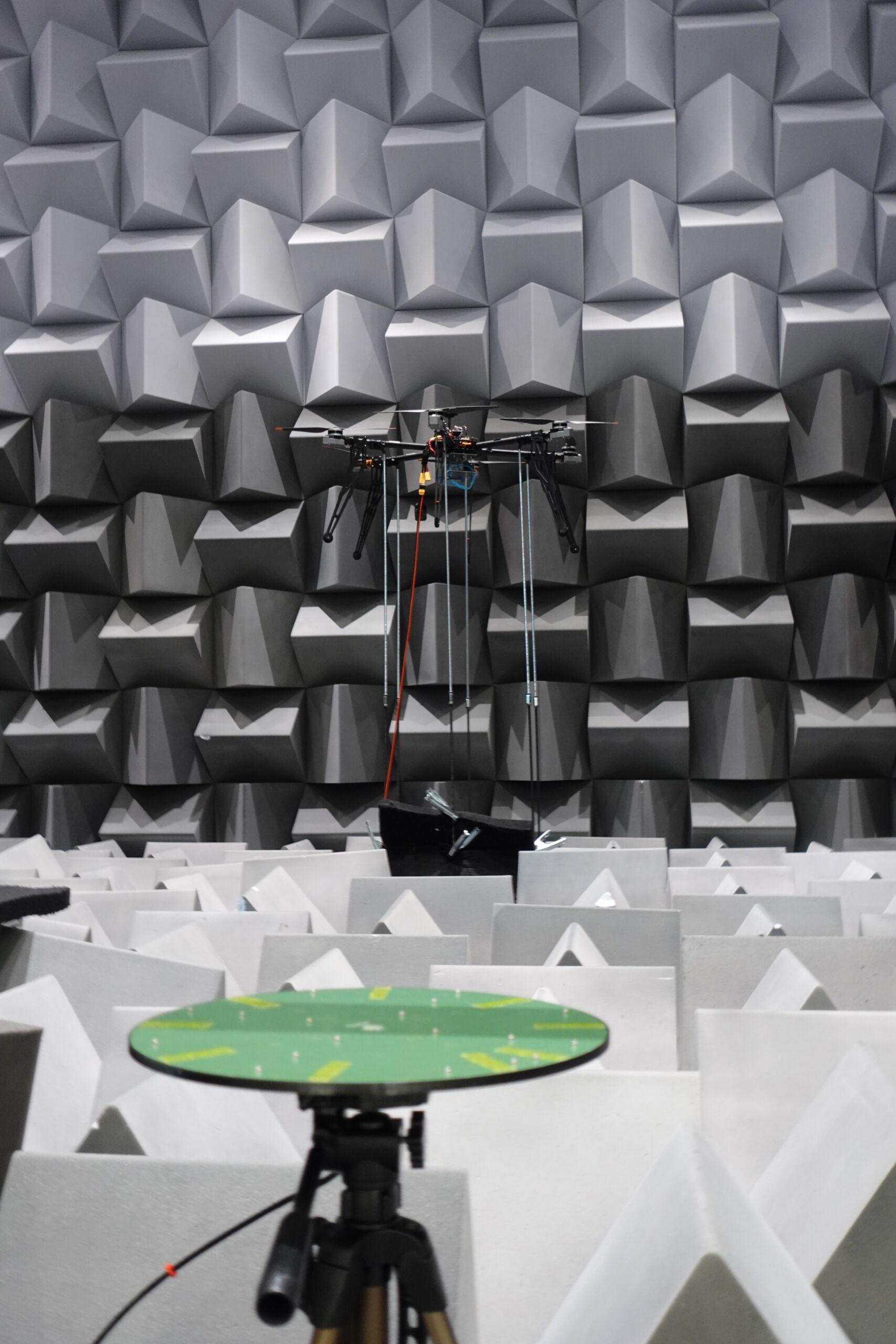
Controlled lab test in the anechoic chamber room of NLR facilities in Marknesse
Acoustically directional arrays have emerged as one of the most dependable methods for drone detection worldwide. With industry-leading performance, BeephoniX Technology will provide these systems in the very
near future to allied nations globally, where they are deployed in both military operations and civilian security setups. Acoustic detection of drones is notably reliable, since drones cannot be manipulated to remain silent.
How does it work?
The CUAS detection sensor uses new technology developed by BeephoniX, which allows an entire array of microphones to be replaced by just one moving microphone (based on the moving ears of bumblebees and bees). It passively identifies and tracks class I and II drones using sophisticated machine learning techniques. Each sensor monitors constantly scanning for changes in sound across different sectors. Several sensors can be combined to cover a full 360-degree field, or to monitor larger areas like perimeters or borders.
When a sound variation is detected, high-resolution acoustic beams capture it, and the system analyzes the data to classify drones, distinguishing them from other noises. By focusing on the unique propeller sounds of drones, the system can recognize both current and future models, minimizing false alarms by filtering out irrelevant sounds.